
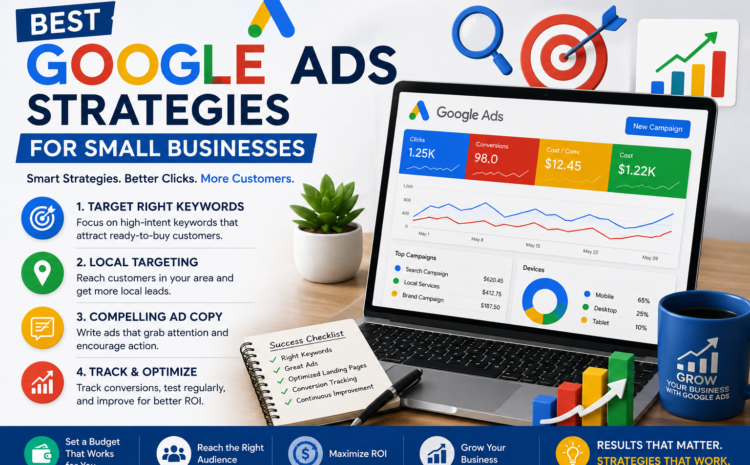
Best Google Ads Strategies for Small Businesses
For small businesses, every marketing dollar counts. Google Ads offers one of the fastest ways to reach potential customers who are actively searching for your products or services. However, simply launching a campaign isn’t enough. Success comes from using the right strategies, optimizing performance, and focusing on measurable results.
In this guide, we’ll cover the best Google Ads strategies for small businesses to help you generate more leads, increase sales, and maximize your return on investment (ROI).
Why Google Ads Works for Small Businesses
Unlike traditional advertising, Google Ads allows businesses to target users based on search intent. Your ads appear when people are already looking for solutions you offer, making it one of the most effective digital marketing channels.
Benefits include:
- Instant visibility in Google Search
- Flexible budgets for businesses of any size
- Highly targeted audiences
- Measurable results and performance tracking
- Scalable campaigns as your business grows
1. Define Clear Campaign Goals
Before creating ads, identify what success looks like.
Your goals might include:
- Generating phone calls
- Increasing website inquiries
- Driving online purchases
- Booking appointments
- Growing local store visits
Every campaign should have one primary objective. Clear goals make optimization much easier.
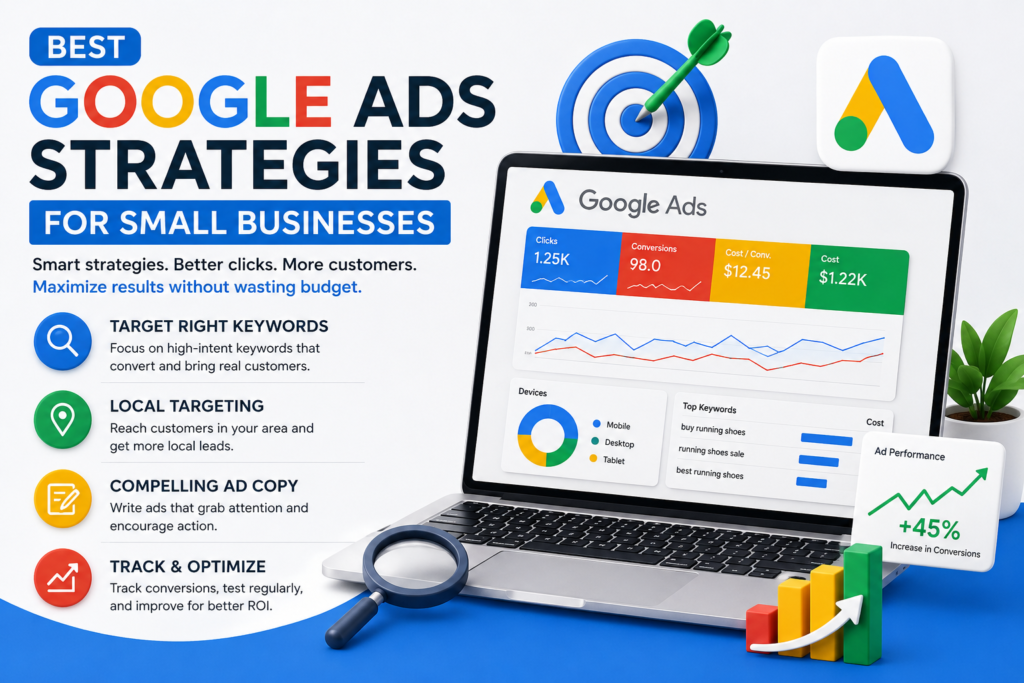
2. Focus on High-Intent Keywords
Not every keyword is worth targeting.
Instead of broad keywords, prioritize search terms that indicate someone is ready to take action.
Examples:
- Emergency plumber near me
- Affordable accounting services
- Buy office furniture online
- Best roofing company in Dallas
High-intent keywords usually produce higher conversion rates and better ROI.
3. Use Location Targeting
Most small businesses serve specific cities or regions.
Google Ads allows you to target:
- Cities
- ZIP codes
- Radius around your business
- Multiple service areas
Avoid paying for clicks from users outside your service area.
4. Write Compelling Ad Copy
Your ad needs to stand out from competitors.
Include:
- Your primary keyword
- A clear benefit
- A strong call to action
- Unique selling points
Example:
Headline: Affordable HVAC Repair Near You
Description: Same-day service, certified technicians, and upfront pricing. Call today for a free estimate mensstore.
5. Create Dedicated Landing Pages
Sending visitors to your homepage often reduces conversions.
Instead, create landing pages that match the specific offer in your ad.
A good landing page should include:
- Clear headline
- Relevant content
- Customer testimonials
- Trust signals
- Contact form
- Call-to-action button
Consistency between your ad and landing page improves Quality Score and conversion rates.
6. Use Negative Keywords
Negative keywords prevent your ads from appearing in irrelevant searches.
For example, if you sell premium products, you might exclude:
- Free
- Cheap
- DIY
- Jobs
- Careers
Regularly reviewing search terms helps reduce wasted ad spend.
7. Start with Search Campaigns
Many small businesses achieve the best results by starting with Google Search campaigns.
These campaigns target users actively searching for products or services, often delivering stronger conversion rates than broader display advertising.
Once profitable, you can expand into:
- Display Ads
- Performance Max
- Shopping Ads
- YouTube Ads
- Remarketing
8. Optimize for Mobile Users
A significant share of Google searches happen on mobile devices.
Ensure your website:
- Loads quickly
- Has click-to-call functionality
- Uses responsive design
- Features easy-to-complete forms
A mobile-friendly experience helps increase conversions and lower bounce rates.
9. Track Conversions
Without conversion tracking, it’s difficult to know which campaigns are producing results.
Track actions such as:
- Phone calls
- Form submissions
- Purchases
- Appointment bookings
- Quote requests
Data-driven decisions lead to better campaign performance over time.
10. Continuously Test and Improve
Google Ads is not a “set it and forget it” platform.
Regularly test:
- Headlines
- Descriptions
- Landing pages
- Bid strategies
- Keywords
- Ad extensions
Small improvements can lead to significant gains in click-through rate (CTR), conversion rate, and ROI.
Common Mistakes Small Businesses Should Avoid
Many businesses lose money by making avoidable mistakes, including:
- Targeting overly broad keywords
- Ignoring negative keywords
- Sending traffic to the homepage
- Failing to track conversions
- Using weak ad copy
- Not reviewing campaign performance regularly
Avoiding these pitfalls can help stretch your advertising budget further.
Measuring Success
Monitor key performance indicators (KPIs) such as:
- Click-Through Rate (CTR)
- Cost Per Click (CPC)
- Conversion Rate
- Cost Per Acquisition (CPA)
- Return on Ad Spend (ROAS)
- Overall ROI
Review these metrics regularly and make adjustments based on the data.
Final Thoughts
Google Ads can be one of the most effective marketing tools for small businesses when managed strategically. By targeting the right audience, using relevant keywords, creating compelling ads, and continuously optimizing your campaigns, you can generate qualified leads while making the most of your advertising budget.
Whether you’re just getting started or looking to improve existing campaigns, applying these proven Google Ads strategies will help your business compete more effectively and achieve sustainable growth.
Frequently Asked Questions
How much should a small business spend on Google Ads?
There’s no universal budget. Start with an amount you’re comfortable testing, monitor performance, and increase spending as campaigns demonstrate positive returns.
Are Google Ads worth it for local businesses?
Yes. Google Ads can be especially effective for local businesses by reaching people actively searching for nearby products or services.
How long does it take to see results?
Search campaigns can begin generating traffic soon after launch, but optimizing for consistent performance often takes several weeks of testing and refinement.
What is the most important factor in Google Ads success?
A combination of relevant keywords, compelling ad copy, optimized landing pages, accurate conversion tracking, and ongoing optimization typically delivers the best results.
Should small businesses hire a Google Ads expert?
If you lack the time or expertise to manage campaigns effectively, working with an experienced professional can help reduce wasted spend and improve performance.


Write a Comment